Why Do People Move: Navigating Major Life Transitions Smoothly

Every single year, millions of households make the monumental decision to pack up their lives and transition to a brand new neighborhood. When looking at global demographic statistics, a fundamental question emerges for sociologists and real estate experts alike: why do people move so frequently? The answer to this complex inquiry is rarely simple, as relocations are typically driven by a combination of professional ambitions, shifting family dynamics, and a desire for an improved quality of life.
Smoothly transition to your next destination by calling 224-404-0069 to secure our expert household packing and transport services today.
Analyzing these underlying motivations reveals the evolving patterns of modern society and how individuals adapt to changing economic landscapes. For instance, an individual might find a phenomenal job opportunity over 700 miles away, prompting an immediate long-distance relocation. By examining the diverse catalysts for change, we can better understand the emotional and logical processes behind why do people move and how these transitions redefine their personal futures.
Corporate Relocations and Career Advancements
Professional advancement stands as one of the most prominent answers when analyzing why do people move across state lines. In an increasingly competitive job market, individuals frequently discover that climbing the corporate ladder requires a physical geographic transition. Companies often incentivize these transitions by offering lucrative compensation packages to ensure their top talent relocates smoothly to new corporate branches.
Furthermore, the rise of specialized remote work opportunities has altered traditional employment migration patterns significantly. Instead of being anchored to a specific metropolitan commercial hub, professionals can now choose where they want to live based on personal preference rather than office location. This professional freedom has allowed thousands of remote workers to seek out communities that align with their personal values.
Shifting Family Dynamics and Milestone Events
- Expanding Households: The joyful arrival of new children naturally prompts parents to seek out properties with additional bedrooms and expansive backyard play areas.
- Empty Nest Transitions: Once grown children head off to college, parents frequently choose to downsize their empty living space to reduce continuous home maintenance.
- Proximity to Relatives: Moving closer to aging parents or extended family members provides a vital emotional support system and facilitates regular caregiving.
- Marriage and Cohabitation: Combining two separate households into a single shared residence marks a major life milestone that requires a brand new space.
Pursuing Better Educational Opportunities
The desire for premium education is a powerful motivator that explains why do people move into specific suburban school districts. Parents routinely research local school rankings, graduation rates, and extracurricular programs long before they ever contact a real estate agent. Securing a residential address within an elite school zone is viewed as a foundational investment in a child’s long-term academic success.
This educational pursuit extends to higher learning institutions as well, with thousands of young adults relocating closer to universities and technical colleges annually. These academic moves create a continuous cycle of migration within college towns, keeping the local housing market highly dynamic. Prioritizing academic quality shapes community demographics and drives local residential growth.
Financial Adjustments and the Cost of Living
Economic factors heavily influence residential mobility, especially during periods of widespread inflation or shifting market values. When local property taxes, insurance premiums, and grocery prices climb too high, homeowners actively seek out more affordable regional economies. Relocating to a state with lower tax brackets allows families to stretch their hard-earned dollars significantly further.
Conversely, achieving a higher level of financial prosperity can also inspire a move to a premium, upscale neighborhood. Gaining a substantial promotion or inheriting family wealth permits individuals to trade up to luxury estates featuring modern architectural designs. Whether the goal is budgeting or upgrading, financial status remains deeply intertwined with why do people move.
Seeking a Better Climate and Lifestyle Changes
The natural environment plays a major role in determining where individuals choose to establish their permanent roots. Many residents living in northern climates grow weary of enduring harsh winter snowstorms and shoveling icy driveways for months on end. This seasonal fatigue drives a steady migration toward southern regions where warm sunshine and outdoor activities are available year-round.
Lifestyle preferences also dictate whether an individual prefers the rapid energy of a dense metropolis or the quiet serenity of rural acreage. Outdoor enthusiasts often migrate toward mountain ranges or coastal beaches to integrate their favorite hobbies into their daily lives. Aligning your geographic surroundings with your personal interests maximizes overall life satisfaction and happiness.
Real Estate Desires and Changing Architectural Styles
Sometimes the motivation behind a relocation has less to do with the surrounding city and more to do with the physical house itself. A homeowner might fall in love with a completely different architectural style, such as a mid-century modern ranch or a historic Victorian estate. This aesthetic desire can prompt a move even if the individual enjoys their current town.
Additionally, the craving for modern home features like integrated smart automation, energy-efficient solar panels, or a professional-grade kitchen can inspire a house hunt. If a current home cannot be easily renovated to include these amenities, purchasing a newer construction becomes the most logical path forward. Upgrading your daily living environment satisfies long-term domestic goals.
The Search for Safer Neighborhoods
Personal safety and peace of mind are non-negotiable priorities for individuals evaluating their current living arrangements. If a neighborhood experiences a noticeable uptick in local crime rates or vandalism, residents will quickly begin planning an exit strategy. Moving to a gated community or a quiet rural area restores a vital sense of security for vulnerable families.
Prospective buyers look for well-lit streets, active community watch programs, and low crime statistics when selecting their next destination. Knowing that your family and personal property are safe allows you to relax and truly connect with your surroundings. Security considerations remain a foundational pillar of residential choice.
Overcoming Social and Community Isolation
Human beings possess an inherent need for meaningful connection and a supportive social network. If an individual feels isolated in their current location due to cultural differences or a lack of community events, they may seek a fresh start elsewhere. Moving to an inclusive, socially active neighborhood fosters new friendships and a true sense of belonging.
Retirees frequently move into specialized active adult communities to surround themselves with peers who share similar interests and daily schedules. These planned neighborhoods offer robust social calendars, fitness classes, and hobby groups that combat loneliness effectively. Finding your true community is a profoundly positive reason to undertake a move.
Navigating Unexpected Health Requirements
As individuals age or face sudden physical challenges, their housing needs can change dramatically. A multi-story home with steep staircases can become a major safety hazard for someone dealing with limited mobility. Relocating to a single-story ranch or an accessible condominium ensures long-term independence and physical safety.
Proximity to specialized medical centers and healthcare professionals also influences where vulnerable individuals choose to live. If a chronic health condition requires weekly treatments, eliminating a long commute reduces stress significantly. Adapting to medical realities is a practical and necessary aspect of residential relocation.
Embracing Independence and Personal Growth
For young adults, moving out of a parental home represents the ultimate milestone of achieving true personal independence. This initial relocation teaches vital life lessons regarding budgeting, home maintenance, and personal responsibility. The excitement of managing your own space is a powerful catalyst that drives college graduates out into the housing market.
This desire for personal reinventing can happen at any age, prompting individuals to leave familiar towns behind to test their resilience in a brand new city. Embracing the unknown fosters profound personal growth and broadens your perspective on the world. Relocating serves as the perfect catalyst for starting an exciting new chapter in life.
Conclusion and Final Observations
In summary, exploring why do people move reveals a rich tapestry of human experiences, ambitions, and evolving necessities. Whether driven by a job over 700 miles away or the simple desire for a warmer winter climate, each relocation represents a proactive step toward a better life. Understanding these motivators helps us navigate our own transitions with clarity.
While the physical process of packing up an entire estate is undeniably challenging, the long-term rewards of finding the perfect home are immeasurable. Stay organized, plan ahead, and embrace the positive transformations that await you in your new neighborhood. Your ideal living environment is always well worth the journey.
Reliable Residential Relocation Services for Your Next Life Chapter
Lift and Load stands on a proud heritage of absolute trust and exceptional service within the relocation industry. We provide comprehensive residential packing, local moving, and long-distance transportation for distances extending beyond 700 miles. Our dedicated crew treats your valuable household treasures with the utmost care. Let us manage the heavy lifting of your next major transition.
Contact: piotr@liftandloadmoving.com | 224-404-0069








FAQs
Career changes and corporate relocations consistently rank as the primary drivers behind long-distance residential moves. Individuals frequently transition across state lines to accept lucrative job offers or transfers. These professional opportunities provide the financial foundation required to establish a brand new home.
The arrival of new children naturally increases the need for square footage, additional bedrooms, and child-safe backyards. Parents routinely leave compact apartments behind to purchase spacious suburban homes located within premium school districts. Adapting to family growth is a major reason why do people move.
Yes, high living costs and rising property taxes frequently push budget-conscious households toward more affordable regional economies. Moving to a state with a lower cost of living allows families to maximize their income. Tracking these financial adjustments helps explain why do people move during shifting economic times.
Harsh winter weather and freezing temperatures frequently motivate retirees and outdoor enthusiasts to migrate toward warmer southern regions. Choosing a destination with favorable year-round weather enhances overall daily comfort and enables a more active lifestyle. Climate remains a highly popular answer to why do people move.
Harsh winter weather and freezing temperatures frequently motivate retirees and outdoor enthusiasts to migrate toward warmer southern regions. Choosing a destination with favorable year-round weather enhances overall daily comfort and enables a more active lifestyle. Climate remains a highly popular answer to why do people move.
Still have questions?
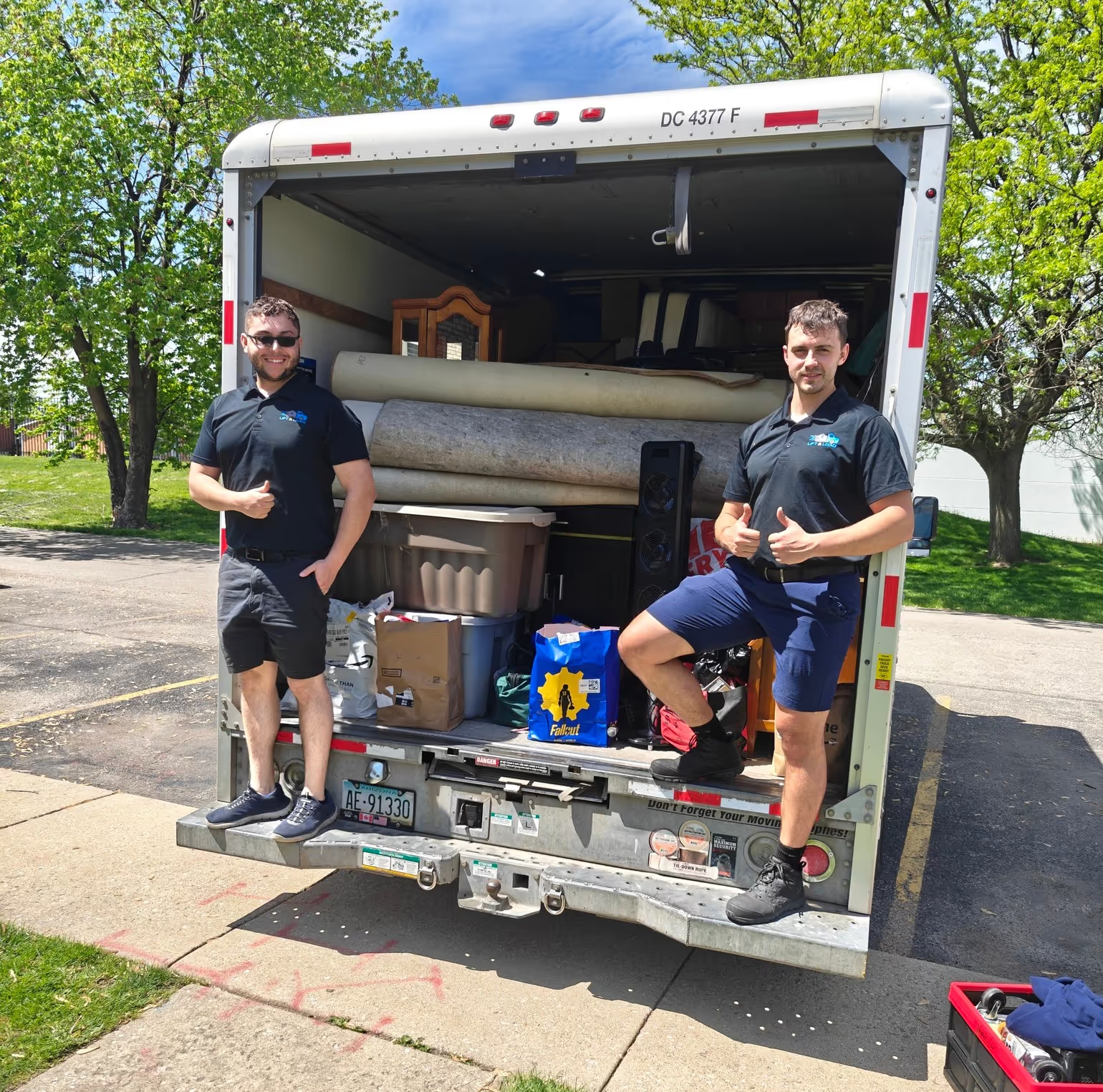
How to move with us?
Hit the “Get a Quote” button and tell us what you need.
Choose the service, date, and time that work best for you.
Our friendly team shows up on time and gets everything done safely.
Sit back while we take care of the rest.
.avif)